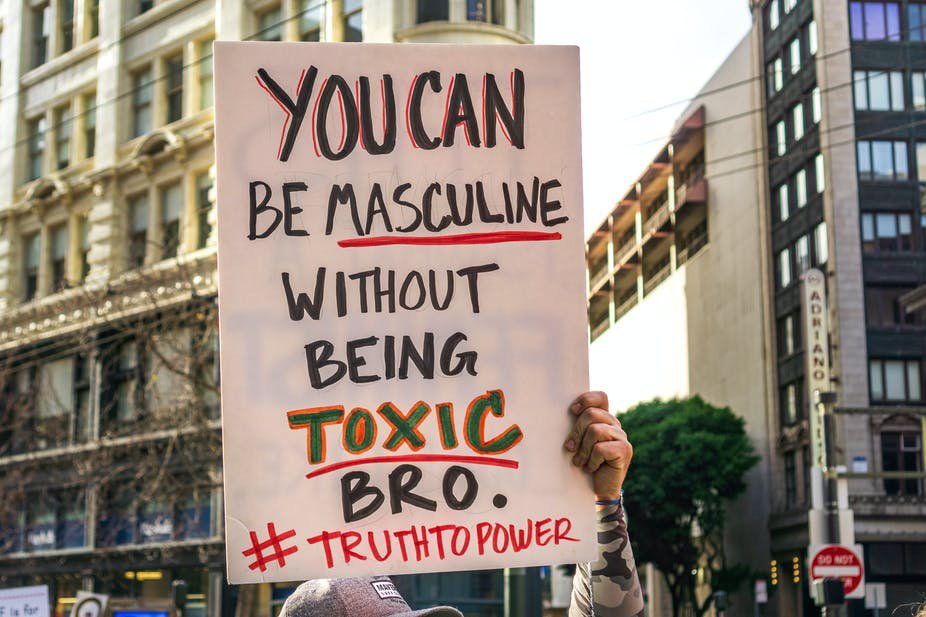

Toxic masculinity is not attractive to normal, healthy women. It’s a no-brainer to most women to stay away from men who show up at racist marches or political rallies dressed up in faux military costumes, waving their fists, carrying guns, and shouting profanities. However, the more subtle forms of toxic masculinity such as domination, intimidation, and emotional withholding are harder to recognize before the damage happens. Men and women suffer from the presence of toxic masculinity.
In the late 1980s, Australian sociologist Raewyn Connell described the ways that white middle-class men used their power and positions to suppress traditionally socially marginalized groups such as women, gay men and working-class men. In recent years, political divisiveness has fueled awareness of toxic masculinity. The incidences of angry men publicly demonstrating violence in their pursuit of power and superiority are pervasive in all forms of current media. These men reject any trait that might be associated with femininity and in doing so pursue an aggressiveness that they view as unquestionably associated with positive maleness.
These toxic attitudes negatively affect both men and women. The glorification of the “strongman” has made it socially difficult for men who reject that version of manliness. The conflict for non- toxic men stems from the labeling of normal, human emotions and behaviors like empathy, nurturance, and tolerance as not being masculine. Most men today embrace self- exploration, emotional honesty, and intimate communication. Many women are finding it difficult to meet men who can connect emotionally, are willing to admit their flaws, strive for self- improvement and find strength in simply being their authentic self. The toxic masculinity culture has caused many normal, healthy men to be uncertain about how women define attractive maleness.
Many men dismiss the term ” toxic masculinity” as a movement whose goal is to feminize men. Men who associate acting tough, withholding emotions, and dominating others with positive maleness suffer from toxic masculinity. The guy who feels strong and prideful when he bullies, gets into physical fights, threatens people, and always pushes to be right or win is toxic. Many men of this type have inaccurate, grandiose ideas about their attractiveness to women. They associate these aggressive traits as essential in separating them from femininity or being seen as gay. In reality, a woman with a strong identity and high self-esteem will see these men as cliched stereotypes with weak, insecure egos. Healthy women are turned off by “macho men”. Women from abusive backgrounds or those with low self esteem are more vulnerable to power-driven, toxic men who master the more manipulative, subtle forms of toxic masculinity. Such women often misread aggressive, selfish traits as strong maleness which may have been missed in the relationship with father.
Being a man is not synonymous with being aggressive, domineering or emotionally withholding. Many men are burdened with the idea that being seen as a real man relies on this cliched definition of masculinity. The toxic masculine man will shame other men who are not driven by the urge or need to intimidate or overpower people. Men who embody the rigid, generic concept of the “strongmen” are riddled with insecurities and an under-developed personal identity. The toxic male relies on weakening those around them as a path to feeling strong and proud. They avoid the vulnerability of feelings and outwardly label those emotional states as feminine. Toxic masculinity limits a man’s ability to be a fully matured, actualized human being.

Women should recognize the following traits in men that indicate toxic masculinity:
- Always needing to lead
- Always wanting their way
- Hyper-Criticalness
- Dominating conversations
- Emotional coldness
- Difficulty making a commitment
- Excessive irritability or aggressiveness when they don’ t get their way
- Sexual selfishness and dominance
Misogyny is an inherent component in this type of man. Superiority over women dominates how they engage in romantic relationships. Workplace experiences are also affected in negative ways, characterized by aggressive competitiveness. Toxic masculinity can be successfully treated if a man seeks help because of negative consequences occurring in their lives because of their behaviors. However, a man without insight and remorse about their negative impact on others is not someone to invest in emotionally or physically.
Leave a Reply