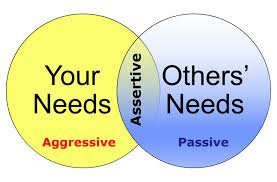
Asserting boundaries and feelings is at the core of effective communication.
Learning to be more assertive is crucial to the development and maintenance of healthy relationships. However, if feelings, wants, and expectations are demanded without regard for the bother person, the response will not be positive. Constructive assertiveness is not aggressive. It’s about speaking up for yourself. Aggressiveness is speaking out with disregard for another person. The difference between saying “I would like you to pay more attention to what I say” and “You better show me more attention or else” is evident in the difference in tone inherent in these statements. It is a misconception that just speaking your mind is assertive. Making “I” statements instead of “you” statements is a simple strategy that reduces the aggressiveness styles of lecturing, judging, and blaming.

Here is an assertiveness model that illustrates how to address issues of importance:
Assertiveness Template
- State the facts regarding the event or issue
- State how you feel about the facts
- Make a request of the other person.
- State a Consequence (Optional depending on the situation)
Specifically stating the topic helps a person focus and engage in the listening role. Expressing feelings about the situation you are discussing is humanizing and increases the possibility that the listener will be more connected to the person and not only the content of the discussion. Making a request directs the conversation towards finding a solution and reduces the negative behaviors of complaining and blaming. However, not all requests will be met and one has to be prepared to negotiate other possible ways to feel heard and satisfied with the outcome of the conversation.
There is an assertive not aggressive way to decline the request. A simple, “No, I cannot do that” with a brief explanation, is an acceptable response. The goal of the assertiveness model is to become a clear and concise communicator and to feel entitled about advocating for your needs, wants and feelings. Being honest and vulnerable raises self- esteem because it communicates personal strength. It is an exercise in staying out of control patterns that aim to force people to change. Rather, assertiveness is about influencing what you want to happen civil, clear communication.
The structure of the assertiveness model is simple. However, overcoming emotional obstacles and issues with self-worth are challenging aspects in utilizing this model. Working on resolving personal deficits in those areas will help make the assertiveness model more successful. Naming the issue, sasying how you feel about it, asking for something to happen that might help the conflict ( a request replaces a “complaint”) and asserting a consequence facilitates closure on an issue, and closure without agreement still has value.
Rebecca Sperber, M.S., MFT
Leave a Reply